Start at the Intake Table: What a Conference Archive Must Capture
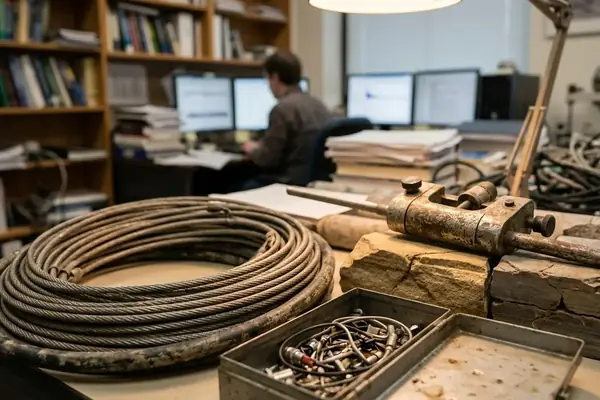
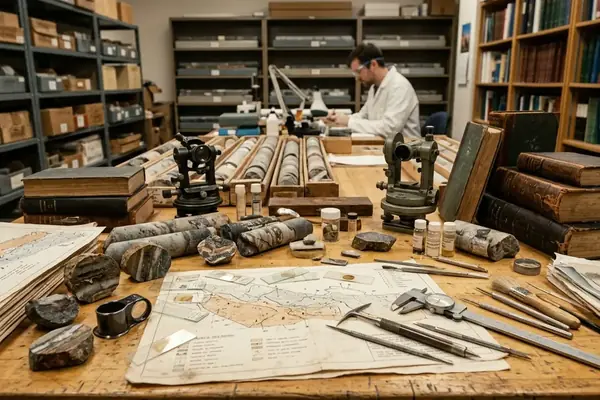
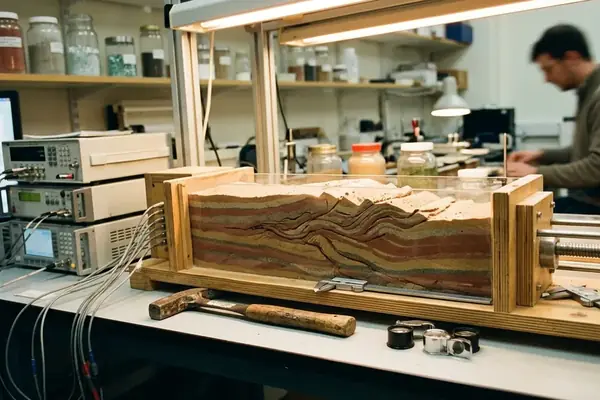
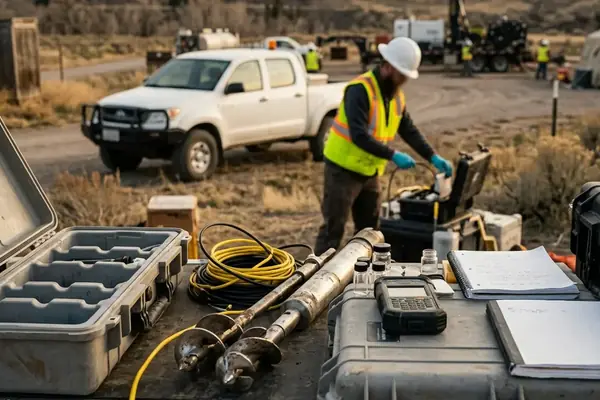
The physical reality of a geoscience convention—the chaotic influx of files, schedules, and hardware, dictates the architecture of its digital memory. Consider the intake table at the Roundup Centre on the Stampede Grounds during the May 11-13, 2008 convention. Poster files arrived continuously on flash drives. Lobby advertising routed actively to plasma TV screens during the three-day convention window. Volunteers checked technical submission contacts against printed manifests.
Capturing this environment requires a repeatable archival workflow rather than a narrative history of the event. The primary goal is to make heterogeneous conference materials searchable by topic, date, program component, person, organization, venue, and file type. Structuring a repository that treats a hydrogeology poster and a lobby display schedule with equal archival rigor demands strict categorization from the moment of receipt.
Set the Acquisition Boundary Before Any File Is Processed
Establishing strict acquisition boundaries prevents scope creep during ingestion. The collection unit is fixed to the single 2008 convention year. We identify the CSPG CSEG CWLS partnership strictly within the scope of that specific event's organizer context. Before any file handling begins, the methodology separates record classes into distinct operational categories: technical submissions, poster presenter materials, outreach programming, field trips, competitions, lobby advertising, deadlines, contacts, and venue records.
Known temporal anchors serve as controlled boundaries. The March 15 exhibitor participation deadline and the April 18 poster board and PowerPoint deadline operate as hard operational limits. The May 7 field trip date and the May 11-13 convention duration define the primary event window. The September 2008 global playoffs reference anchors the Student Challenge Bowl. A limitation of this rigid temporal bounding is that multi-year initiatives require careful cross-referencing to maintain context without breaking the single-year collection unit.
Design a Metadata Model for Mixed Technical and Program Records
Traditional repositories often force event materials into publication-centric schemas, leaving a gap when handling the operational reality of a convention. The proposed approach builds a core schema around title, year, event, program component, subject area, contributor, organizational role, date, venue, location, file format, relationship, rights status, and preservation status.
Technical assets map differently from outreach and event assets. A poster template marked as PPT 1.8mb requires specific file metadata. Conversely, the KISP records demand sponsor, committee, recruitment purpose, and career-focus fields. AI frequently merges KISP outreach metadata with technical poster fields if not explicitly separated by the schema.
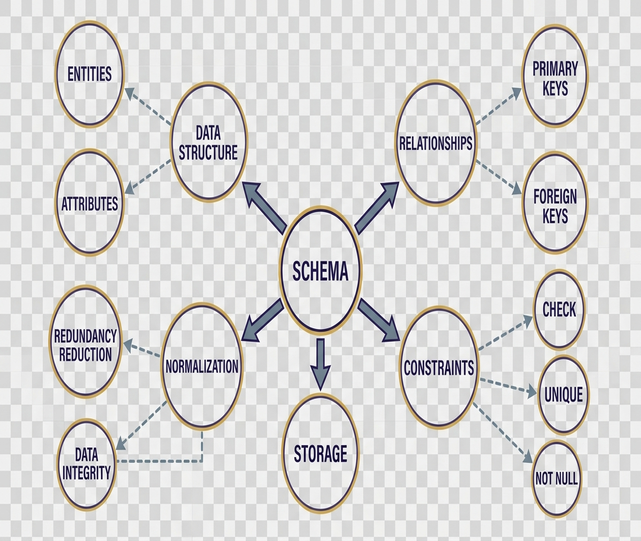
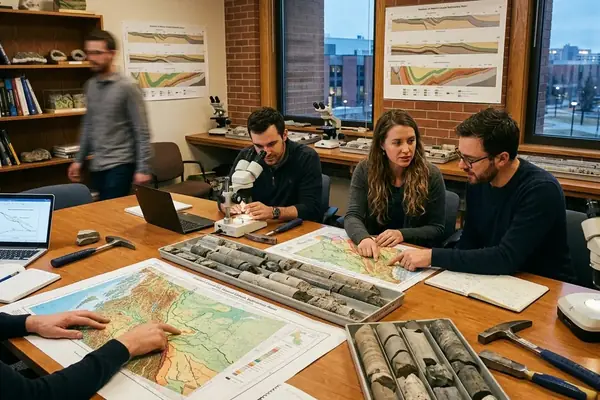
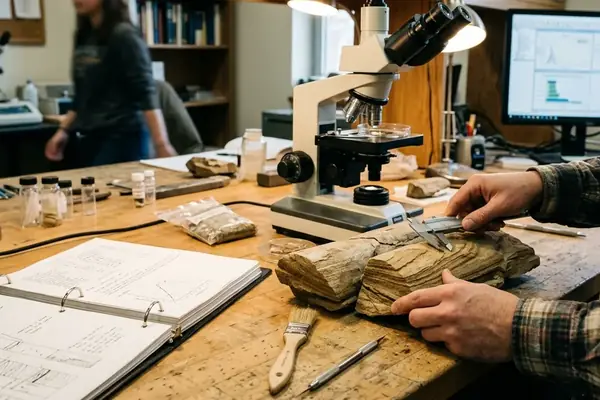
The model includes geoscience-specific subject fields. Indexing covers Earth Science, Geoscience, Geophysics, and Geosciences career outreach. Field-trip observations require granular descriptors, such as the scotch-eggs texture noted in building stone geology. Integrating the FAIR Guiding Principles ensures these mixed records remain findable and interoperable across disparate database systems.
Normalize Names, Acronyms, Subjects, and Places
Normalization prevents fragmented search results. Authority tables for people, organizations, places, program names, and subjects are built prior to indexing.
Field Note: Treat KISP and Kids in Science Program as linked labels to ensure queries for either term return the complete dataset.
Organizational roles require precise scoping. The Burgess Shale Geoscience Foundation is recorded as the coordinating organization specifically for the 2008 outreach context. Randle Robertson appears as Executive Director of The Burgess Shale Geoscience Foundation strictly within the relevant KISP context. David Middleton is recorded as KISP Committee co-chair and CSPG representative only where that role applies. Field data from the University of Calgary indicates that generic tools assign current contact details to 2008 submission handlers, corrupting the historical record. The venue geography normalizes to the Roundup Centre Stampede Grounds Calgary.
Ingest Files with Preservation Controls, Not Just Upload Forms
A robust archive relies on strict preservation controls. The ingest sequence follows a defined path: receive the asset, assign an accession identifier, capture the source context, create a preservation copy, create an access copy, record file characteristics, and queue for metadata review.
Using the April 18, 2008 poster board and PowerPoint submission deadline provides a mechanism for grouping incoming files by operational deadline. We track the PPT 1.8mb poster presentation template as a reusable conference asset, distinct from individual poster submissions. Capturing the plasma TV lobby display hardware context explains the specific file sizing and resolution choices made by the original creators.
Record Provenance Where It Explains the Material
Distribute trust signals inside the records they qualify rather than creating a generic credibility block at the collection level. For KISP, record The Burgess Shale Geoscience Foundation as the sponsor and coordinating organization strictly within the 2008 pilot recruitment initiative context.
For the Student Challenge Bowl, record SEG as the international organizing body and CGGVeritas as the sponsor in relation to that specific competition. They are not recorded as sponsors of the full proceedings archive. Similarly, Bill Ayrton is documented as the Field Trips FTPRE02 trip leader on May 7, 2008. This granular provenance ensures users understand the exact origin and authority of each component.
Build Search Around the Questions Technical Users Actually Ask
Search architecture must serve the specific queries of petroleum geologists, exploration geophysicists, reservoir engineers, hydrogeologists, academic researchers, government geoscience staff, graduate students, and energy-sector technical professionals. While this facet structure optimizes retrieval for the 2008 dataset, its application to multi-decade collections requires additional hierarchical mapping.
We prioritize practical retrieval paths: topic, convention year, program component, contributor, sponsor or organizer, venue, date, file type, and related event. The system must support cross-record discovery. A user searching Geophysics should readily find the Student Challenge Bowl materials. A user searching Earth Science careers should find the KISP outreach records.
Run Quality Assurance Against Dates, Roles, and Relationships
Quality assurance separates a functional archive from a digital dumping ground. We establish QA gates for date consistency, role consistency, duplicate titles, acronym expansion, file-to-record matching, and relationship accuracy. A two-pass review separates mechanical validation from meaning checks.
Date reconciliation serves as the primary filter. May 7, 2008 belongs exclusively to the field trip. May 11-13, 2008 belongs to the convention itself. September 2008 belongs to the global playoffs in Las Vegas.
Important: Check whether organization names are acting as organizer, sponsor, coordinating organization, foundation, committee, or international body before publishing. Misattributing a sponsor as an organizer invalidates the provenance chain.
Publish Citation Rights and Administrative Notes
The final presentation layer requires a public record template built with stable citation patterns and conservative rights language. Administrative notes remain strictly separated from the public-facing metadata.
The system generates a recommended citation field for each program component. A specific rights note is required for student and sponsor-associated assets to protect intellectual property while enabling academic reference.
Worked 2008 Seed Collection
To implement this architecture, execute the following five-step seed collection process to establish the baseline repository structure.
- Create the parent collection record titled "2008 CSPG CSEG CWLS Convention Proceedings".
- Generate the first child record for the technical poster template, attaching the PPT 1.8mb file and tagging the April 18 deadline.
- Generate the second child record for the KISP outreach program, explicitly including the May 2006 student visit date as historical context within the 2008 pilot initiative.
- Generate the third child record for the Student Challenge Bowl, assigning SEG as the international organizing body and linking the September 2008 Las Vegas global playoffs.
- Generate the fourth child record for the FTPRE02 field trip, assigning Bill Ayrton as the trip leader and locking the date to May 7, 2008.
Bottom Line: There is one catch: all four seed records must complete the identical date, role, subject, and relationship QA gates before any public release is authorized.