
About GeoConvention
Understanding the editorial framework, technical scope, and practical application of the Canadian Geoscience Archive.
Why This Archive Exists
Historically, technical insights shared at annual geoscience gatherings remained confined to the physical rooms where they were presented. Extended abstracts, detailed slide decks, and poster presentations often vanished into proprietary corporate networks or isolated hard drives shortly after the closing remarks. Standard academic databases index final, polished theories but frequently omit the iterative structural geology and tectonic controls discussed during active exploration phases.
The Canadian Geoscience Archive bridges this operational gap. It captures the applied research, case studies, and theoretical models presented at annual programs. This infrastructure makes ephemeral conference sessions into a persistent, searchable repository, ensuring that early-stage field observations remain accessible to the earth science community long after the initial presentation.
What Technical Readers Can Expect to Find
The repository houses distinct technical tracks tailored to subsurface disciplines. Readers will find applied geophysical interpretation, rock physics, and VSP methods within Seismic Geophysics, alongside production-relevant subsurface characterization and permeability architecture in Reservoir Characterization.
The collection heavily emphasizes Canadian sedimentary basins. This is particularly evident in the applied geoscience for Athabasca oil sands and SAGD operations detailed in Oil Sands & Heavy Oil. This concentration of regional data provides a robust baseline for comparative studies across different extraction methodologies. The open question for future contributors remains how rapidly these historical baseline models will adapt to emerging thermal recovery and solvent-assisted extraction technologies.
How the Proceedings Context Shapes the Resource
Evaluating conference proceedings requires a different analytical lens than reading formal journal publications. The working hypothesis behind extended abstracts is rapid knowledge transfer. Authors submit their methodologies and preliminary findings to share active, ongoing field developments rather than waiting years for formal peer review.
Consequently, the findings represent a snapshot of subsurface understanding at a specific moment in time. While these abstracts provide immediate access to field-tested workflows, recognizing the inherent limitations of preliminary conference data is necessary when applying these models to new basin analyses. Despite this constraint, the resulting archive offers a proven method for tracking industry trends and technological shifts before they reach formal publication.
Editorial Organization and Technical Boundaries
Content organization follows strict technical boundaries to maintain the integrity of each discipline. Research on depositional systems, sedimentary facies, and sequence stratigraphy sits exclusively within Stratigraphy & Sedimentology. Conversely, studies focusing on tight gas, source rocks, and hydraulic fracturing are routed directly to Unconventional Resources.
This taxonomy provides a clear routing mechanism for specialized researchers. It prevents the dilution of highly technical topics and ensures that practitioners can locate relevant analog data without sifting through unrelated geophysical processing workflows.
How Different Readers Can Use the Archive
Standard literature reviews often miss the granular, operational details of regional basin evolution. Exploration teams frequently encounter structural complexities that are actively being debated in conference halls but have not yet been resolved in textbook models.
Practitioners use this archive to trace the evolution of specific geological interpretations. By reviewing the Basin Analysis & Tectonics records, geoscientists can track how thrust system interpretations or tectonic control models have shifted across multiple convention years. This longitudinal view allows teams to see which methodologies gained traction in the field and which theoretical approaches were ultimately abandoned.
The People and Review Context Behind the Work
The integrity of any technical program relies entirely on its review mechanism. The Scientific Committee evaluates submissions based on technical merit, relevance to current industry challenges, and clarity of data presentation. The review framework established by the committee during the program's early years ensures a consistent standard across all disciplines.
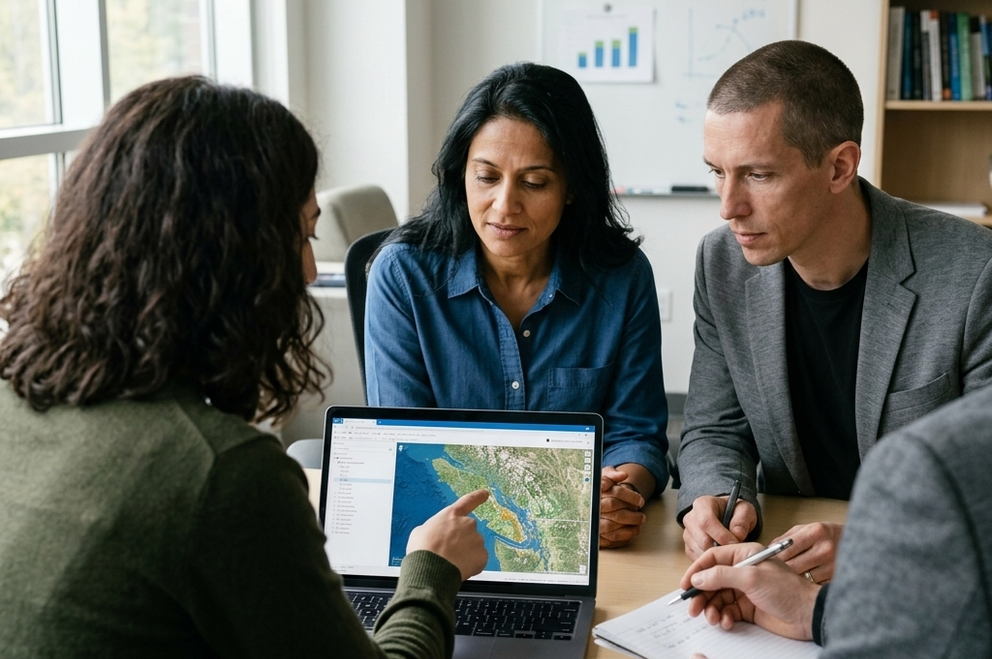
This peer-review process filters out purely commercial pitches in favor of applied science. The resulting GeoConvention Proceedings reflect a curated cross-section of the Canadian geoscience community's active research portfolio, focusing on actionable subsurface insights rather than vendor promotions.
Responsible Use, Corrections, and Contact Pathways
Navigating this repository requires an understanding of its operational parameters. Users seeking clarification on specific abstracts, requiring access support, or wishing to report technical errata should utilize the Contact pathways. The legal framework governing data usage, citation requirements, and platform attribution is detailed comprehensively in the Terms of Use and Privacy Policy.
The archive ultimately functions as a continuous stratigraphic record of the industry itself. The Western Canadian Sedimentary Basin represents one of the most densely sampled subsurface volumes on Earth, serving as the primary physical laboratory driving the structural and stratigraphic methodologies documented throughout these proceedings.