
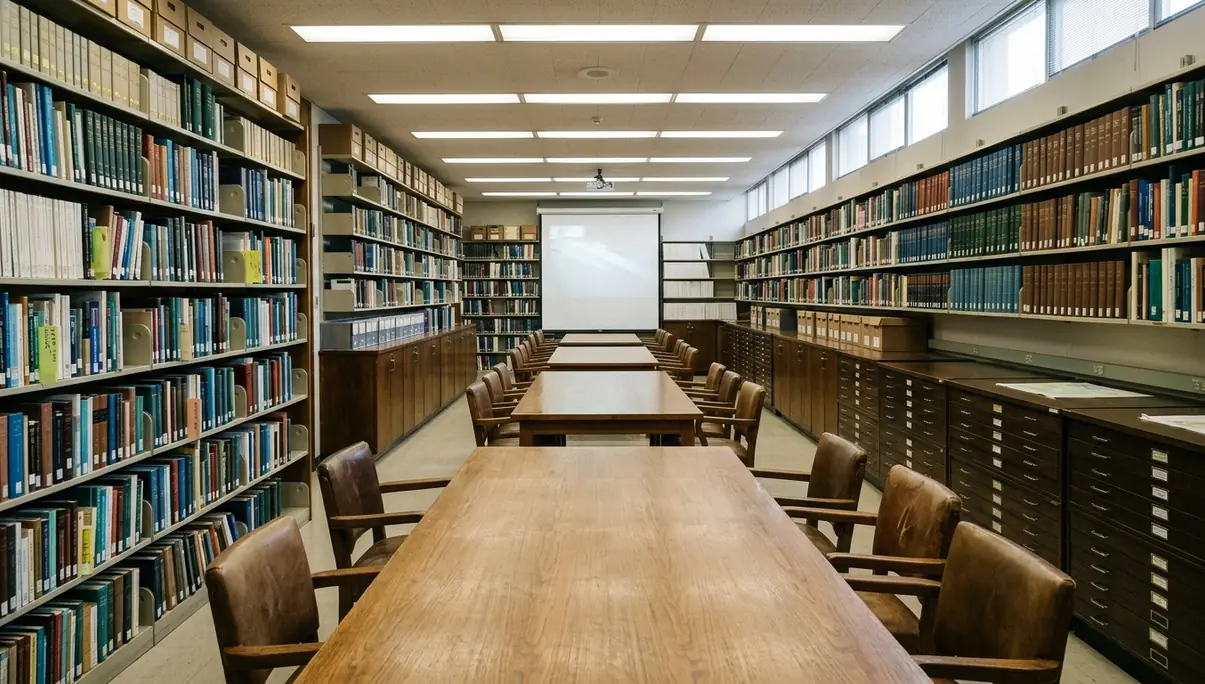
A technical home for Canadian applied geoscience research
For geologists, geophysicists, engineers, hydrogeologists, researchers, students, and public-sector geoscience staff who work from conference evidence into applied subsurface interpretation.
Preserving the Technical Record of Canadian Basins
The standard approach to conference documentation relies on abstract books—volumes that quickly lose context once the technical sessions conclude. By structuring extended abstracts and presentation materials into a citation-ready archive, researchers maintain a continuous thread of applied geoscience knowledge. Sustained cooperation over consecutive review cycles with Canadian geoscience societies guarantees that these records meet rigorous academic standards.
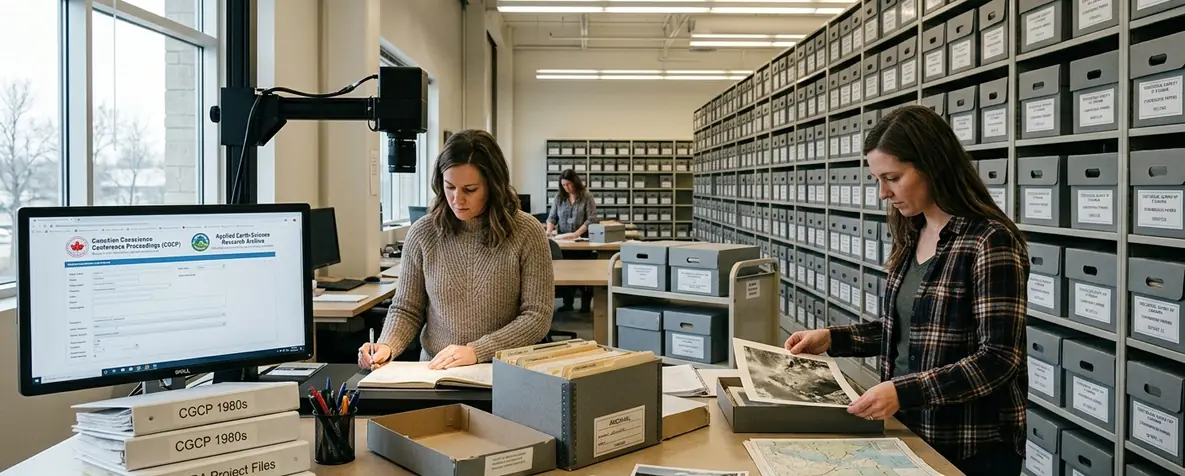
Field reporting confirms that access to historical proceedings accelerates the evaluation of unconventional plays. When exploration geophysicists can trace the evolution of a specific seismic processing technique through multiple annual programs, they avoid duplicating early experimental errors.
Core Research Disciplines
The archive organizes applied earth-science research across distinct technical pathways, focusing on petroleum geology, hydrogeology, and resource development.
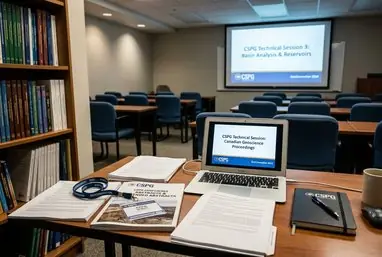
GeoConvention Proceedings
Conference abstracts, technical sessions, and proceedings connected to annual programs.
View Proceedings
Reservoir Characterization
Technical research on reservoir quality, petrophysics, and permeability architecture.
Explore Research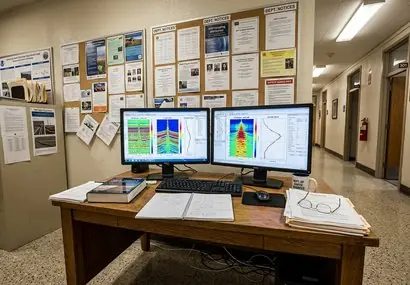
Seismic Geophysics
Applied geophysical interpretation, rock physics, and subsurface imaging methods.
Explore Research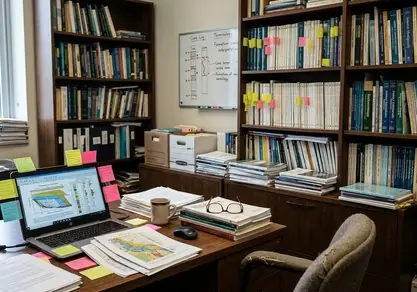
Stratigraphy & Sedimentology
Research on depositional systems, sequence stratigraphy, and sedimentary facies.
Explore Research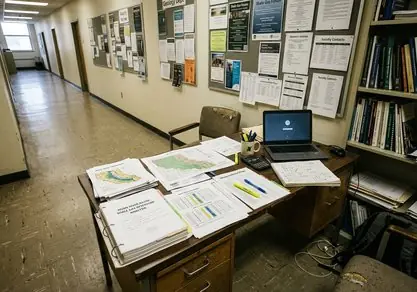
Unconventional Resources
Technical studies of tight gas, shale gas, source rocks, and hydraulic fracturing.
Explore Research
Environmental Geochemistry
Hydrogeology, aqueous geochemistry, and subsurface fluid migration research.
Explore ResearchScientific Committee
The curation of the proceedings archive relies on active practitioners across reservoir engineering, geophysics, and stratigraphy. This committee evaluates technical submissions to ensure the repository reflects current operational challenges in Canadian and international basins.

The review board includes Ananya Kulkarni, Senior Reservoir Simulation Engineer specializing in unconventional resource recovery; Dr. Wei-Ling Chen, Principal Exploration Geophysicist focused on seismic inversion and rock physics; and Dr. Arash Mansouri, Senior Sedimentologist and Stratigrapher with expertise in clastic stratigraphy. Their combined oversight ensures that the archive maintains a proven balance between theoretical modeling and applied field development.
Integrating Legacy Data with Modern Workflows
Archived technical papers frequently serve as the foundation for comparative basin analysis. When evaluating structural controls on sedimentary basin evolution, researchers map historical interpretations against newly acquired 3D seismic volumes.
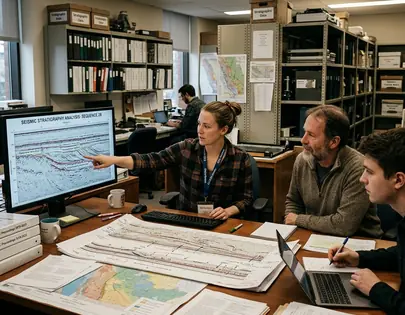
While historical proceedings provide a robust baseline for basin analysis, older seismic processing workflows often require recalibration against modern rock physics models before integration into current reservoir simulations. This methodological constraint means that legacy amplitude anomalies must be re-evaluated using updated velocity models to prevent mischaracterization of fluid contacts.
The value of the archive lies in documenting the progression of these interpretive frameworks. The transition from vertical to horizontal drilling in the Montney formation fundamentally shifted the stratigraphic framework required for resource assessment, rendering legacy vertical-well correlations obsolete without integrated seismic inversion.
Latest Conference Proceedings
Geological Controls on Heavy-Oil Recovery Performance
Carbonate Versus Clastic Reservoir Architecture: A Geoscience Comparison
Aqueous Geochemistry Methods for Subsurface Resource Assessment
Using XRF Data to Interpret Mudrock Composition and Environmental Context
Petrophysical Controls on Reservoir Quality in Carbonate Formations
Comparing Arctic and Interior Canadian Sedimentary Basins
Rock Physics Constraints for Oil Sands Seismic Interpretation
Our Scholarly Method
Investigate
Gather evidence from credible studies.
Interpret
Draw meaning from collected material.
Deliver
Present the reasoned outcome clearly.