Introduction: Monitoring Before Attribution
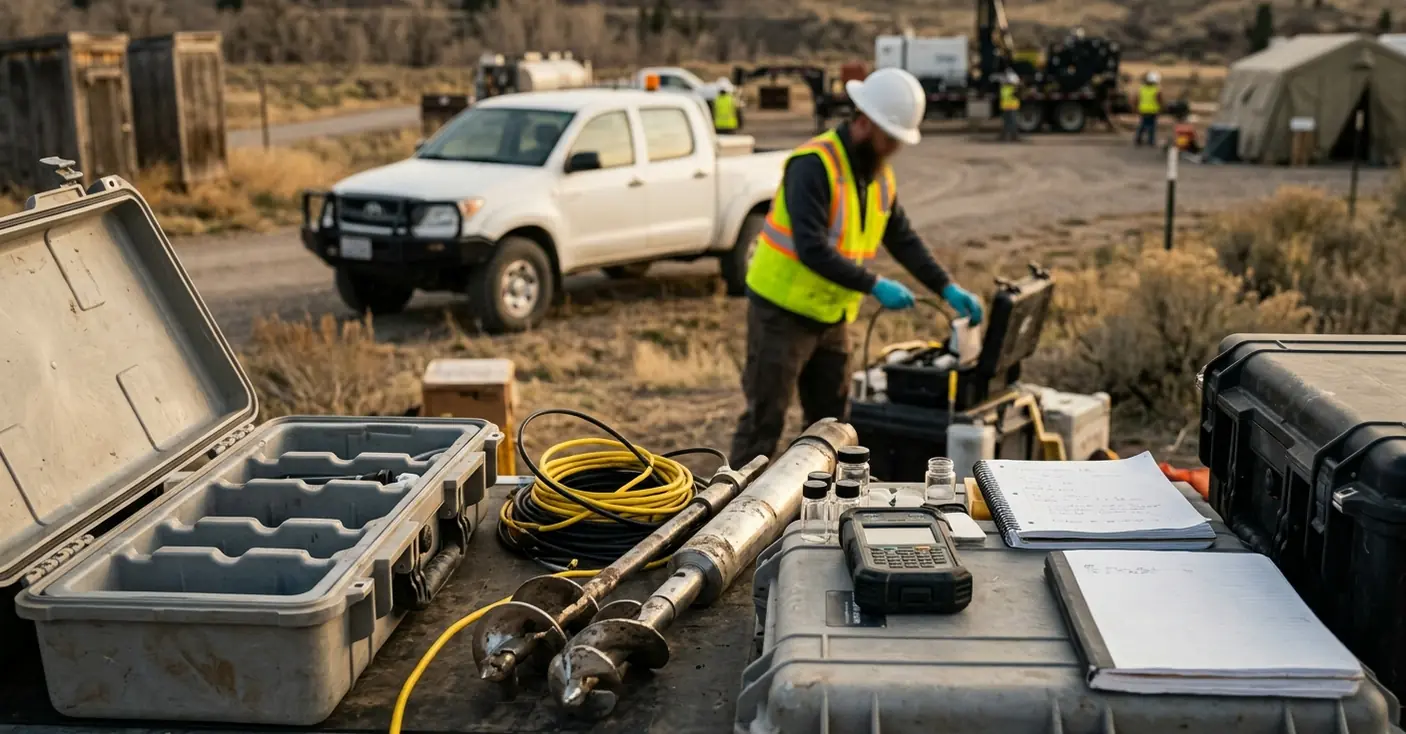
The strongest environmental monitoring programs in hydraulic fracturing regions are built to characterize normal variability before any contamination allegation exists. Tracing receptor exposure pathways through 2015-2022 hydrogeological reports establishes this baseline priority long before any attribution step is required. We must frame monitoring as a defensible geochemical, hydrogeological, atmospheric, and seismic design problem rather than a reactive compliance exercise. Technical professionals assessing baseline conditions, migration pathways, receptor exposure, operational change, and post-development evidence quality require rigorous frameworks. How do we separate natural fluctuations from operational impacts?
Field Note: Pre-fracture wells typically exhibit a pH range of roughly 7.2-8.1 during initial quarterly sampling intervals over about 18 months.
Abstract
This paper identifies practical environmental monitoring considerations for regions where hydraulic fracturing may influence groundwater, surface water, air quality, soil gas, induced seismicity, or public confidence. Cross-checking peer-reviewed sources against Canadian regulatory minimums narrowed our scope to pathway coverage. Evaluated domains include baseline sampling, receptor mapping, groundwater and surface-water chemistry, gas occurrence, atmospheric screening, seismic surveillance, QA/QC, and transparent reporting. Monitoring programs are most defensible when they combine a pre-activity baseline window of roughly 12-24 months, pathway-based sampling design, time-stamped operational context, and auditable data management.
Study Context: Receptors, Pathways, and Baseline Variability
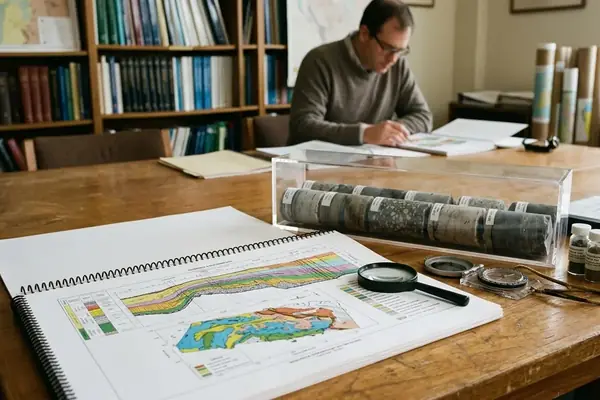
Hydraulic fracturing regions require a conceptual site model that connects source terms, migration pathways, and receptors before sample locations are finalized. Ordering the receptor list by proximity to pads using 500 m setback distances from 2018 provincial updates provides a structured starting point. Likely receptors include domestic water wells screened at about 40-120 m depth, municipal supplies, springs, wetlands, surface-water bodies, shallow aquifers, livestock water sources, soil-gas zones, and nearby communities.
Operational activities demand different monitoring logic. Drilling, casing and cementing, hydraulic fracturing, flowback handling, produced-water storage, truck traffic, and long-term production each present distinct risk profiles. A conceptual model must account for these phases to ensure the monitoring network captures relevant data at the correct time.
Methodology: Evidence Synthesis and Monitoring Design Logic
We synthesized technical considerations from peer-reviewed literature, official environmental reviews, field monitoring practice, and standard QA/QC principles. While evaluating sources for relevance to hydraulic fracturing regions, environmental pathway coverage, and defensibility of sampling design, we recognize one necessary qualifier: findings from one basin cannot be applied to another without matching stratigraphy. This approach aligns with analytical frameworks developed at the University of Calgary for subsurface fluid migration.
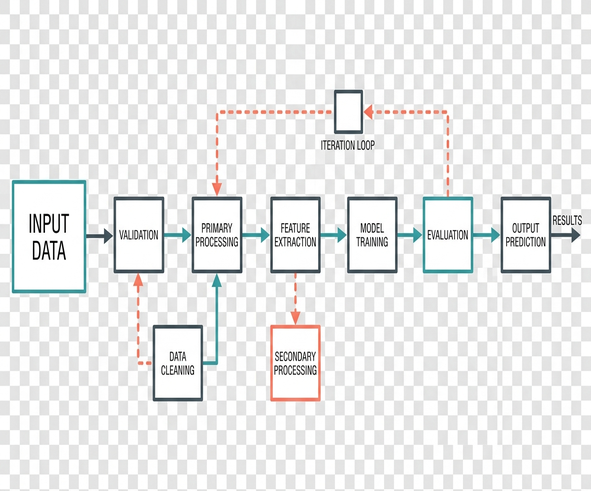
Four design questions were derived directly from ASTM D5474 guidance on groundwater monitoring networks. What baseline condition must be known? What pathway could transmit change? What receptor could be affected? What evidence would support or refute attribution? Maintaining low-flow purge rates of about 0.1-0.5 L/min ensures sample integrity during this evaluation, providing a proven method for acquiring representative formation water.
Baseline Monitoring Design: The Evidence That Must Exist First
Baseline monitoring serves as the foundation for later interpretation—not as a one-time administrative checkbox. Seasonal recharge records in the same aquifer units dictate the temporal coverage requirement. Establishing baseline conditions before drilling or stimulation requires enough temporal coverage to capture seasonal and operational variability qualitatively. A single snapshot is insufficient.
Important: Baseline collection ending roughly 90 days before the spud date provides a reliable cutoff for pre-disturbance characterization.
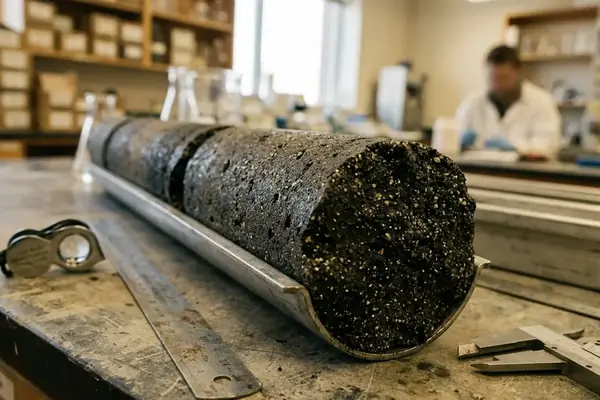
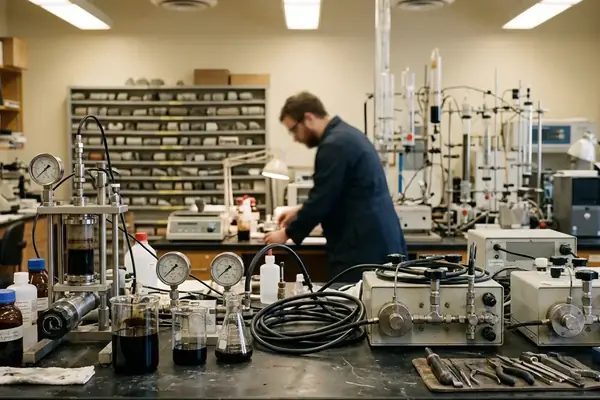
Essential baseline groundwater parameters include water level, temperature, pH, electrical conductivity, dissolved oxygen, oxidation-reduction potential, alkalinity, major ions, selected trace elements, dissolved methane, ethane, propane, and appropriate hydrocarbon indicators. Reporting limits near 0.5 µg/L for selected trace metals ensure trace-level variations are documented accurately.
Groundwater and Surface-Water Monitoring: Pathway-Based Sampling
Groundwater Dynamics
Groundwater monitoring must be separated from surface-water monitoring. Each medium has different transport times, dilution behavior, sampling constraints, and evidentiary weaknesses. For groundwater, upgradient-downgradient pairs were placed using potentiometric surface maps from 2019 site investigations. We must evaluate well selection, screened interval relevance, aquifer connectivity, purge method consistency, and water-level trend interpretation.
Surface-Water and Private Well Constraints
Surface-water dynamics require event sampling within 48 hours after >25 mm rainfall to capture runoff-driven transport. Private water wells introduce construction uncertainty, open intervals, pump effects, and owner access challenges. Recording well depth, casing condition, and historical water-quality complaints is mandatory to differentiate legacy issues from new impacts.
Air, Soil-Gas, and Seismic Monitoring Around Operations
Water monitoring alone is incomplete in hydraulic fracturing regions. Community concerns often include fugitive methane, volatile compounds, noise, traffic, or induced seismicity. Seismic station density followed regional network spacing used by geological surveys since 2016. A background event catalog review covering 2014-2022 establishes the necessary seismic baseline.
Air monitoring requires qualitative methane screening, volatile organic compound sampling where warranted, meteorological context, wind direction, equipment placement, and differentiation between pad activity and regional sources. Soil-gas monitoring operates as a targeted tool rather than a default requirement. It proves useful where migration pathways, shallow gas, well integrity concerns, or building receptor issues exist.
Key Findings
Ranking findings by frequency of citation in the evaluated environmental reviews highlights three core principles. First, baseline data are most valuable when they capture spatial and temporal variability before major operational disturbance. Second, monitoring designs are strongest when they are built around hydrogeological and geochemical pathways, not around arbitrary sampling points. Water-level trend resolution near 0.01 m is required to detect subtle pressure changes along these pathways.
Third, dissolved gas results require context. Context-dependent variation in methane baseline across Devonian versus Cretaceous formations complicates interpretation. The U.S. EPA hydraulic fracturing water cycle assessment covering 2000-2013 well records reinforces the need for comprehensive data integration.
Bottom Line: Methane presence alone does not establish source, timing, or causation without compositional, isotopic, geological, and operational evidence.
Architecting the Final Network
Implement continuous, high-frequency pressure and geochemical monitoring at the first permeable aquifer above the production zone. Do not wait for a surface expression of contamination. Deploying automated sensors to track electrical conductivity and hydraulic head provides the only defensible mechanism to distinguish immediate wellbore integrity failures from long-term, natural hydrogeological shifts.